
Hampton Parole and Probation
Parole and probation are both forms of supervision in the community, but they begin in different ways. Parole is release from a prison sentence under stated terms. In Virginia, the Virginia Parole Board decides eligible discretionary parole matters and certain conditional-release cases. Virginia largely ended discretionary parole for felony offenses committed on or after January 1, 1995, subject to exceptions. Eligibility must be tied to the offense date and controlling law, including Va. Code § 53.1-151.
Probation comes from a court order. It may follow a suspended sentence and does not prove that the person left a state prison. VADOC Community Corrections can supervise both parolees and probationers. Hampton also has pretrial and local community corrections programs. Those programs are not interchangeable with state parole. Read the court order or Board action first, then contact the office named by that authority.
| Record type | Who orders it | Best confirmation |
|---|---|---|
| Parole | Virginia Parole Board for an eligible prison sentence | Board decision, then VADOC custody and District 30 status |
| Probation | Sentencing court | Signed court order and supervising VADOC district |
| Pretrial supervision | Court before final disposition | Hampton court record and local Pretrial Division |
| Final discharge | Authority that controls the term | Formal discharge record, not merely absence from a locator |
- Parole
- Conditional release from prison before the sentence fully ends.
- Probation
- Court-ordered community supervision, often tied to suspended jail or prison time.
- Discharge
- The formal end of a custody or supervision obligation.
- Absconder
- A person officially reported as no longer complying with required supervision contact.
Verify Hampton Supervision Status
Start with identity and the legal basis for supervision. The same name can appear in more than one Hampton case. A VADOC number is more reliable than a name when available. The VADOC Inmate and Supervisee Locator can show a person under VADOC custody or supervision, but it is not promised as a permanent archive after final discharge. A missing result does not prove that supervision ended.
- Match the person to the Hampton court case by full name, case number, and date. Read the signed order for probation or other supervision language.
- For a state case, search the VADOC locator with the seven-digit DOC number when known. A name search needs at least the first three letters of the first name and the full last name.
- If parole may apply, check the Parole Board decision material. Copy the exact outcome and date. Do not turn “granted” into an actual release date.
- Call VADOC Probation and Parole District 30. Ask what identifiers the office accepts and what status it may lawfully confirm.
- For a fully discharged person who no longer appears, request the inactive VADOC record and the signed release or discharge documents.
The broader Hampton released-inmate search and local release-record path are covered on the Hampton release records home page. Use the Sheriff record when the issue is departure from local custody. Use VADOC for a state-responsible sentence or state supervision.
Hampton Supervision Through District 30
VADOC Probation and Parole District 30 serves Hampton. The researched official directory shows a main telephone number of 757-727-4855. It also displays both 7 West Queens Way and 903 Enterprise Parkway, Suite 110, without making the relationship between those addresses clear in extracted text. Call before visiting. Reporting instructions are individual and must come from the supervising officer, not from a generic web schedule.
VADOC Probation and Parole District 30Hampton service area
Directory lists: 7 West Queens Way and 903 Enterprise Parkway, Suite 110
Phone: 757-727-4855
VADOC Community Supervision directory
Call to confirm the current visit address and permitted disclosures.
The official VADOC Community Supervision page is shown in the captured source below.
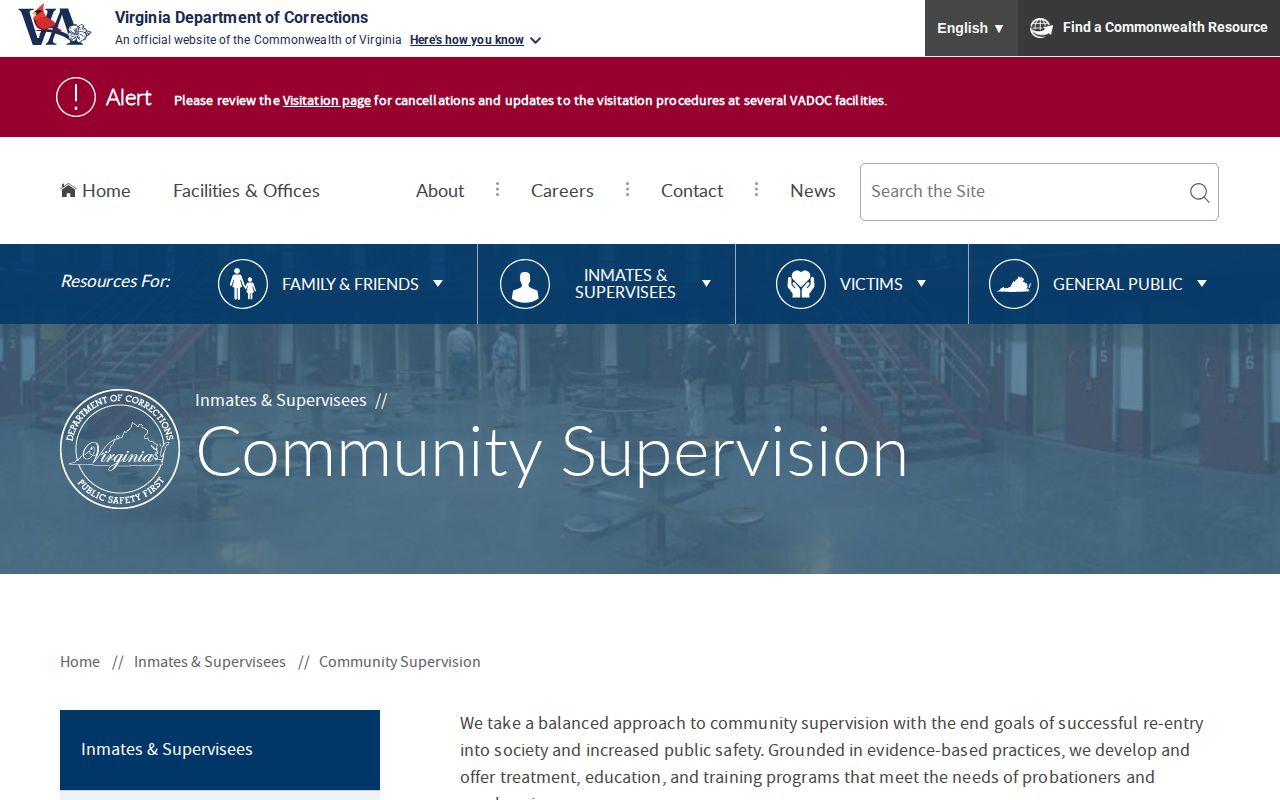
The image helps identify the statewide supervision channel. District 30 remains the local office to call about a Hampton assignment.
Public staff may be unable to give detailed case facts. That limit is not proof of inactive supervision. Ask a narrow question about which office administers the order, then use the court or VADOC records channel for documentary proof.
Hampton Parole Board Records
The Virginia Parole Board and VADOC Community Corrections have separate roles. This is a distinctive Hampton supervision issue because a Board result may be found before a District 30 assignment or physical release can be confirmed. “Granted” generally means approval subject to an effective date, release planning, conditions, and any holds. “Denied” leaves confinement under the existing sentence. “Deferred” postpones a final decision. “Rescinded” withdraws an earlier action.
Record the Board’s wording exactly. Next, check VADOC for the custody event and supervision status. VADOC release procedures include review for warrants, detainers, continued-custody orders, uncalculated sentences, and other barriers. A detainer is a request or order from another authority to hold or transfer the person. It can stop a planned community release even after favorable Board action.
The official Virginia Parole Board landing page appears in the source capture below.
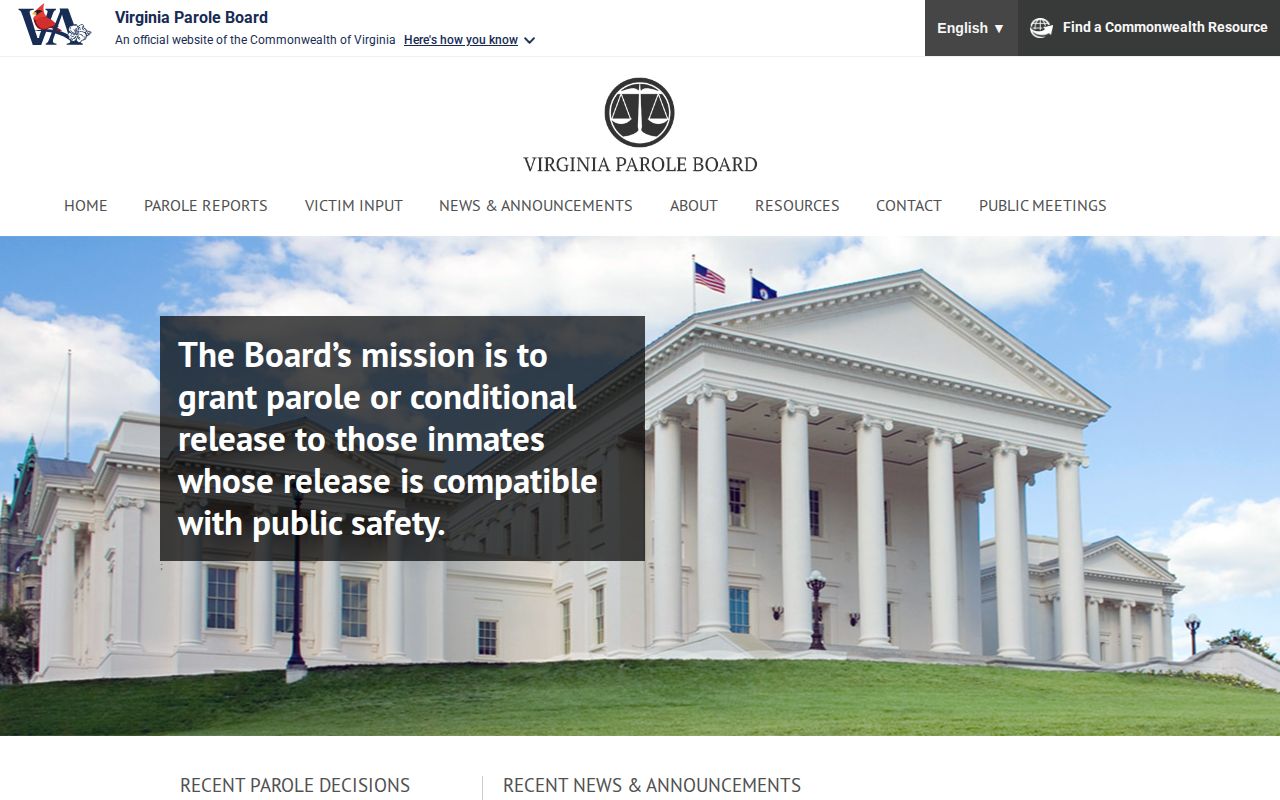
The Board source establishes the decision channel. VADOC still supplies the later custody and supervision record.
Hampton Pretrial Supervision Differs
A Hampton defendant released before trial may report to the local Pretrial Division rather than VADOC District 30. The Pretrial Division is at 236 N. King Street and lists 757-726-6904. Published hours are Monday, Wednesday, and Thursday from 8 a.m. to 4:30 p.m.; Tuesday from 8 a.m. to 6:30 p.m.; and Friday from 8 a.m. to 3 p.m.
Pretrial supervision does not mean parole. It also does not mean the criminal case ended. Hampton/Newport News Community Corrections administers local court programs that are distinct from state parole. Confirm the status in the Hampton court order, then use the named local office. This prevents a common error: calling District 30 about a person whose obligations stem from a pretrial bond order.
Hampton Supervision Violations and Warrants
Conditions differ by person and order. They may include reporting, compliance with a supervision plan, or completion of court-ordered terms. A missed appointment does not by itself establish an absconder or warrant. Use official VADOC wanted information when available, then check Hampton court entries for a revocation proceeding or warrant-related event. Contact law enforcement or District 30 when safety or surrender instructions are involved.
A violation can lead to a warning, changed conditions, a court filing, arrest, or revocation. Revocation means the court or other authority withdraws a prior conditional status after the required process. It may change the remaining sentence and release timeline. Never confront or try to locate a person based on rumor. Confirm through the responsible agency.
Note: Virginia Jail VINE tracks participating jail custody events, not every probation meeting or supervision violation.
Hampton Post-Release Reentry Resources
Hampton has a named Re-Entry Council that links public, nonprofit, and faith-based participants. The city also hosts a “So You Just Got Released ... Now What?” packet. These are local navigation tools beyond VADOC supervision. They can help a released person work through identity documents, health care, transportation, family support, personal property, and required reporting without confusing help services with the agency that holds the legal supervision record.
Use the Hampton Re-Entry Council for local resource navigation. Use District 30 or the office named in the order for reporting rules. A helpful program cannot amend parole conditions, and a supervision office does not replace general reentry support.
Correct Hampton Release Records
The local reentry packet is a sound start for post-release documents and agency navigation. It is not the place to correct a jail record. If a Hampton release entry appears wrong, direct the issue to the Sheriff’s Inmate Records or FOIA channel. Identify the disputed field, booking date, facility, and case number. Ask for the existing release transaction, supporting court order, and any releasable amendment or audit entry.
Hampton accepts records requests through its portal and by mail, fax, email, phone, or in person. The city records-request guidance says requests should identify existing records with reasonable detail. It does not require an agency to answer a broad question. Ask for a cost estimate, and do not assume a correction at the jail automatically changes a court or VADOC record.
Hampton Supervision Discharge Records
Supervision ends through formal discharge, expiration, court action, or another authorized event. A person may leave prison on parole or probation yet remain visible as a VADOC supervisee. Later, after all state obligations end, the locator may stop returning the record. That disappearance is not a discharge certificate.
For a historical state record, identify the VADOC number and ask for the signed release documents, conditions, final supervision discharge, and relevant status dates. VADOC operating procedures provide Form 17 for inactive inmate or CCAP probationer/parolee records. For court probation, obtain the signed order and later discharge or revocation entries. Keep each record tied to its custodian.
Virginia law recognizes post-release supervision within its sentencing framework, including Va. Code § 53.1-165.1. The exact term depends on the judgment and current law. A final answer therefore comes from the controlling order plus the agency’s discharge record.